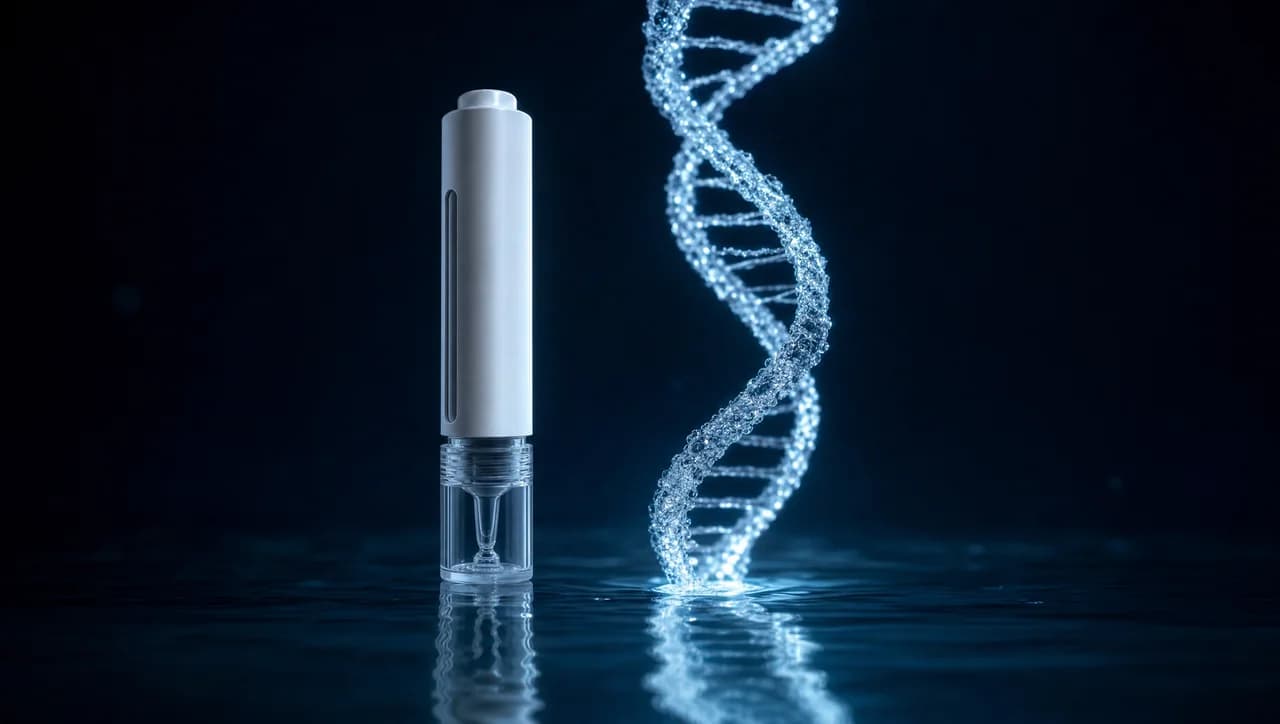
About the formulation
The most technical framing in the range, and the one requiring the most care in how it is phrased. This product is built around DNA-integrity markers — meaning integrity is what we measure and image. That is a statement about methodology, not a claim that the preparation repairs anyone's DNA.
The distinction matters. Cells possess sophisticated endogenous repair machinery; no supplement substitutes for it. What can be observed in a laboratory setting is whether cells challenged with an oxidative stressor show more or less DNA fragmentation depending on prior treatment. That is an observation about damage, imaged directly.
If you came here expecting a product that rewrites damaged sequence, we would rather correct the expectation than sell into it.
How it works
The observation method is again the comet assay. Its usefulness is that it operates at single-cell resolution: rather than averaging a population, it shows the distribution — how many cells are intact, how many are badly fragmented, and how wide the spread is.
In the reference experiments, cells challenged with an oxidative stressor showed shorter comet tails when pre-treated with the Bacillus F postbiotic than when not. Short tail means DNA that did not migrate, which means DNA that stayed largely intact.
This is in vitro work, and we label it as such everywhere it appears. It is not a human trial, we do not claim one exists, and anyone in this category claiming clinical DNA-repair outcomes without a registration number and published results should be treated with suspicion.
For readers who want to evaluate the method rather than take our summary of it, the comet assay has been in routine use in genotoxicity testing since the 1980s and is well described in the open literature. We publish our own imaging rather than only citing others, and we label it as in vitro work every time it appears. That combination — publish the images, state the limits — is the whole of what we are claiming here.
Specifications
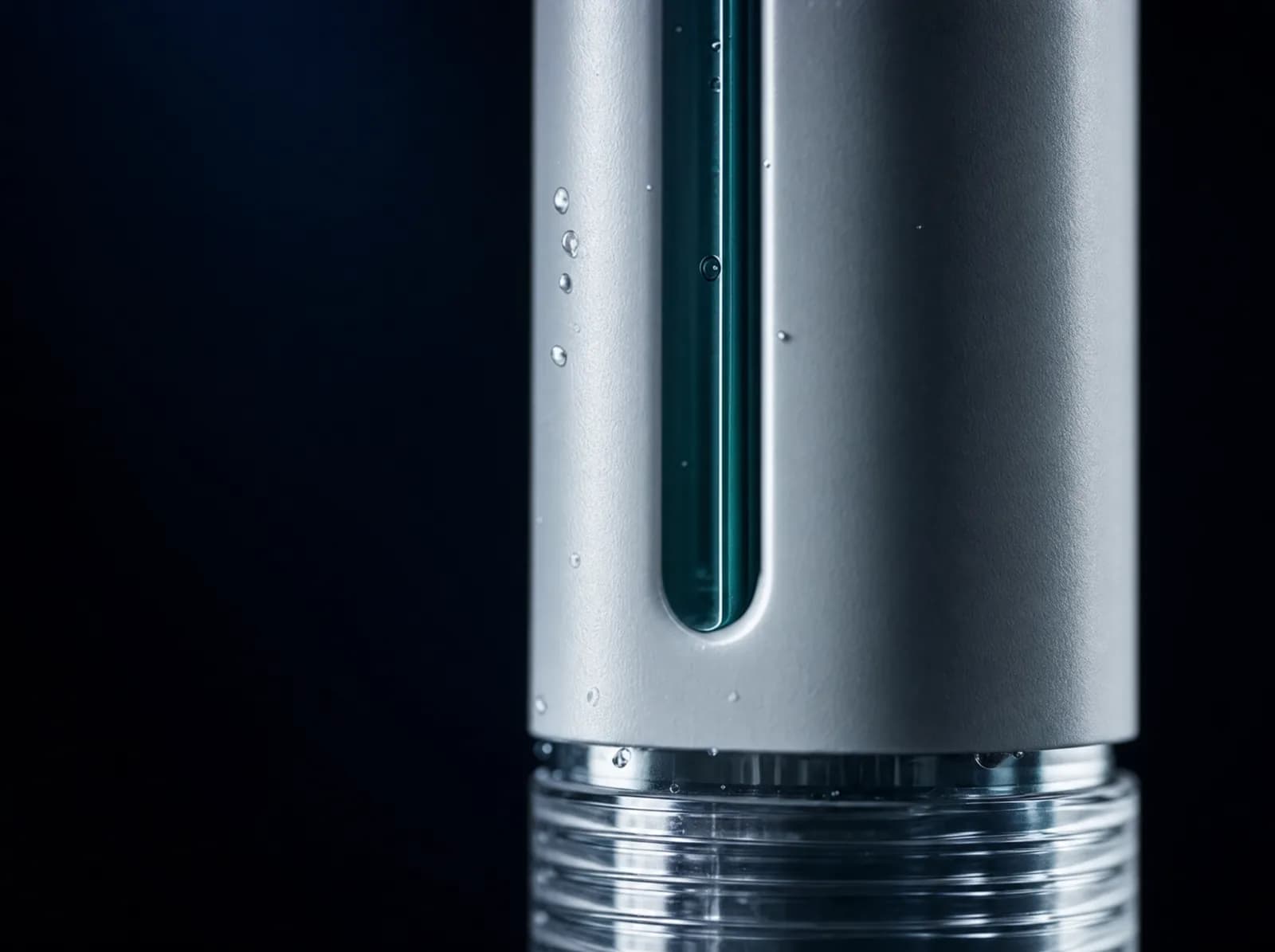
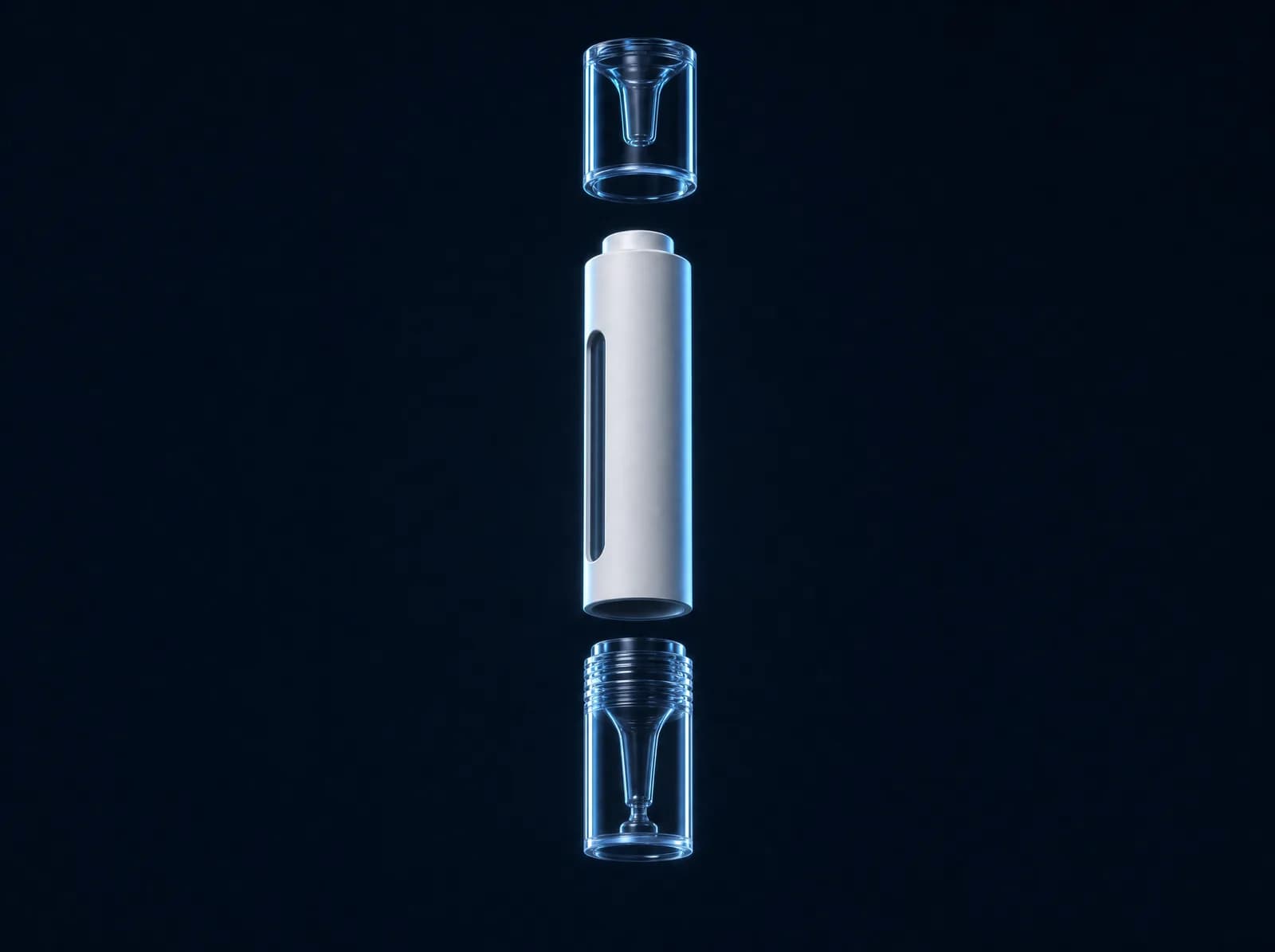
| Format | Sublingual applicator pen — clear cartridge with measured-dose tip |
| Active fraction | Cell-free Bacillus F metabolite complex (postbiotic) |
| Daily dose | 1 ml measured dose, sublingual, morning |
| Protocol length | 30 days per bottle · 90 days recommended before re-testing |
| Storage | Room temperature, away from direct light |
| Origin | Fermented & bottled in the EU · strain from Yakutia permafrost |
| Documentation | Patent WO2012060729 · deposited genome sequence |
| Evidence type | In vitro comet-assay imaging — not a human clinical trial |
Compliance & standards
The strain and its applications are covered by international patent WO2012060729 plus five national patents, and the organism is sequenced and deposited — so every batch comes from the same defined organism. The patent scans and the comet-assay imaging are published openly on the Science page.
Marketed as a dietary supplement — not a medicine; statements have not been evaluated by the FDA.
What to expect
Expect careful language on this page, because the topic invites careless language everywhere else. We are describing an imaging method and what it showed in vitro, not an outcome in your body.
There is no consumer test that will tell you your DNA damage burden changed because of a supplement. If you want to run the closest available approximation, use a lab offering an oxidative-DNA marker, take two baselines to establish your noise floor, and change only one thing.
Use cases
- The mechanism-first reader who wants to understand the assay before considering the product.
- Quantified-self users tracking DNA-damage or oxidative markers in a structured panel.
- Practitioners who need to see the method before recommending anything to a patient.
Not sure where it fits? Start with Bacillus F vs NMN — our most-read comparison.
Frequently asked
Related solutions
Start your 30-day protocol
Limited monthly batches. We confirm availability for your country within 48 hours.