Home / Science
Research authority

Every claim, backed by
documented evidence

The Bacillus F research corpus: strain discovery, genome deposit, the international patent family, comet-assay evidence and the patent documents — published here, openly.

Discovery & the strain

In 2009, permafrost cores drilled at Mammoth Mountain, Yakutia, yielded a bacterium that revived in culture after an estimated three million years of dormancy. The strain — informally named Bacillus F — became the subject of a research program spanning microbiology, genomics and gerontology.

What makes it interesting is not the age itself but the mechanism: surviving that long requires extraordinary defenses against oxidative damage — exactly the machinery our postbiotic formulation is built to deliver. Read the narrative version on the Story page.

Prof. Anatoli Brouchkov
Head of Geocryology, Moscow State University — led the Bacillus F research program
His story →
You don't date the organism — you date its prison. The permafrost layers at Mammoth Mountain are stratified sediment whose age is established by paleomagnetic and biostratigraphic methods; a bacterium sealed inside a layer cannot be younger than the layer itself. Critics rightly note contamination risk during drilling, which is why cores were sampled from their sterile interior and the isolation was replicated. The strain's robust, sequenced genome is consistent with long dormancy rather than a modern contaminant.

Genome & patents

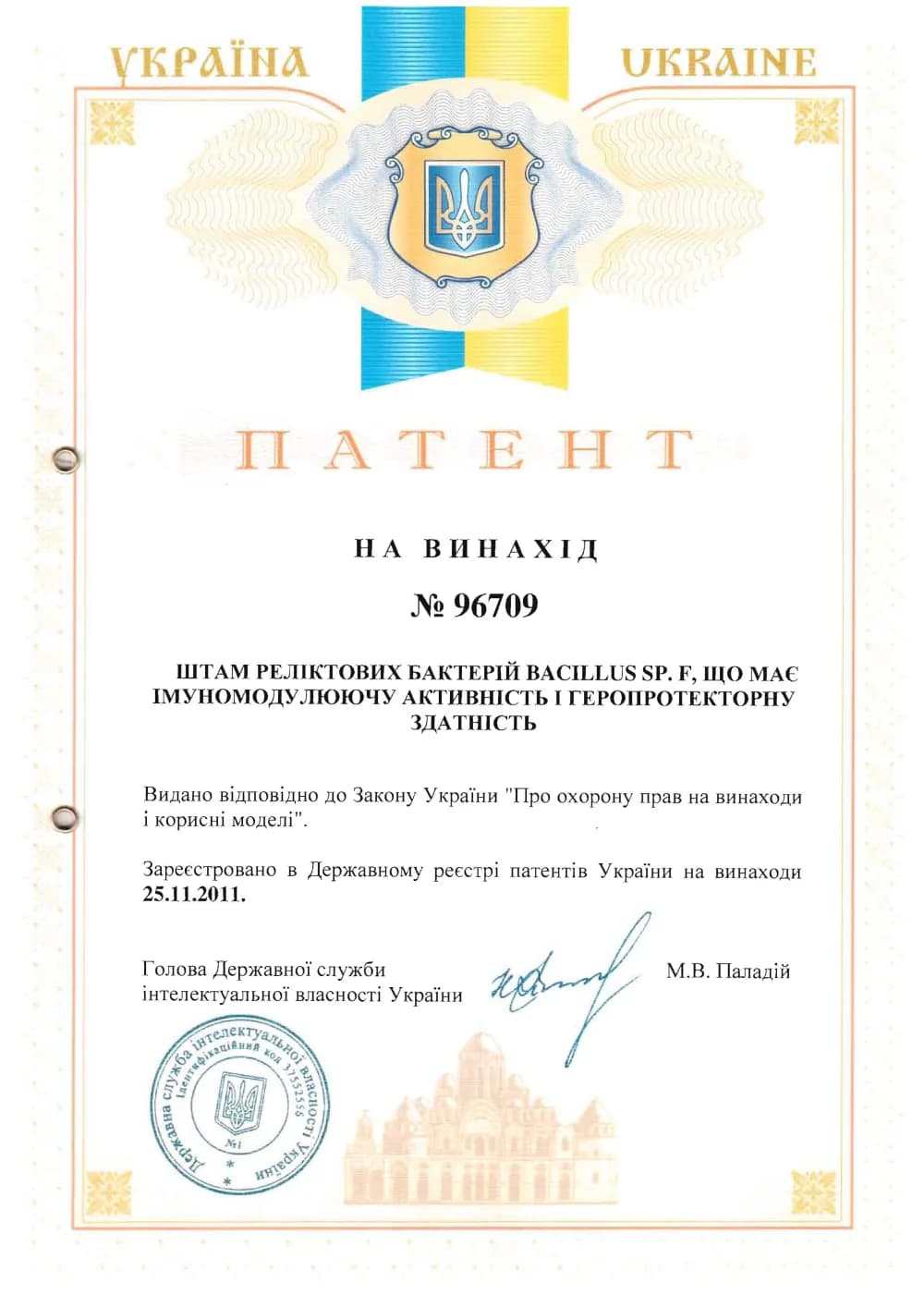
The genome was sequenced and deposited; the strain and its applications are protected by an international patent family. Each entry below links to the official register.

WO2012060729Bacillus sp. strain and applicationsInternational (WIPO)RU + EPNational phase filings2 patentsUS + JP + CNNational phase filings3 patentsGenome depositSequenced genome, public repository accessionReference

Comet-assay evidence

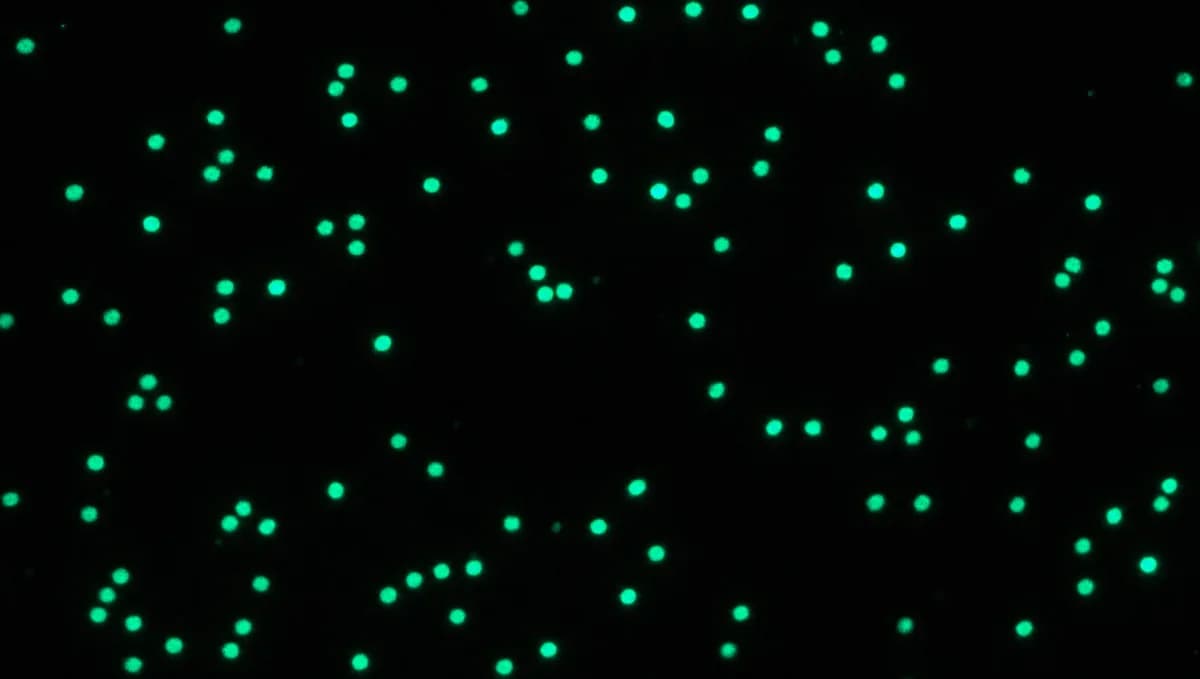
Single-cell gel electrophoresis — the comet assay — visualizes DNA fragmentation directly: damaged DNA streams out of the nucleus like a comet tail. Drag the divider to compare untreated cells with cells exposed to the Bacillus F postbiotic in vitro.
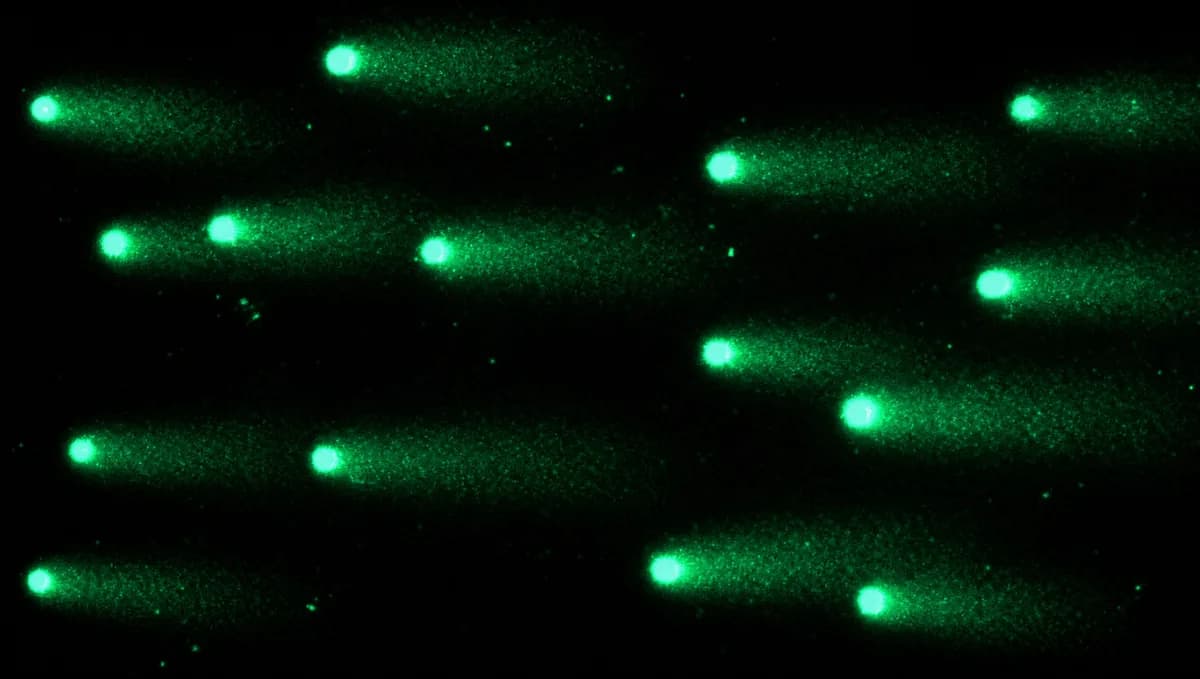
Comet assay fluorescence microscopy — untreated cells with DNA fragmentation tails
Comet assay fluorescence microscopy — treated cells with intact nuclei
Untreated
+ Bacillus F

Patent documents

The published patent scans. Click any to open the full-resolution scan.
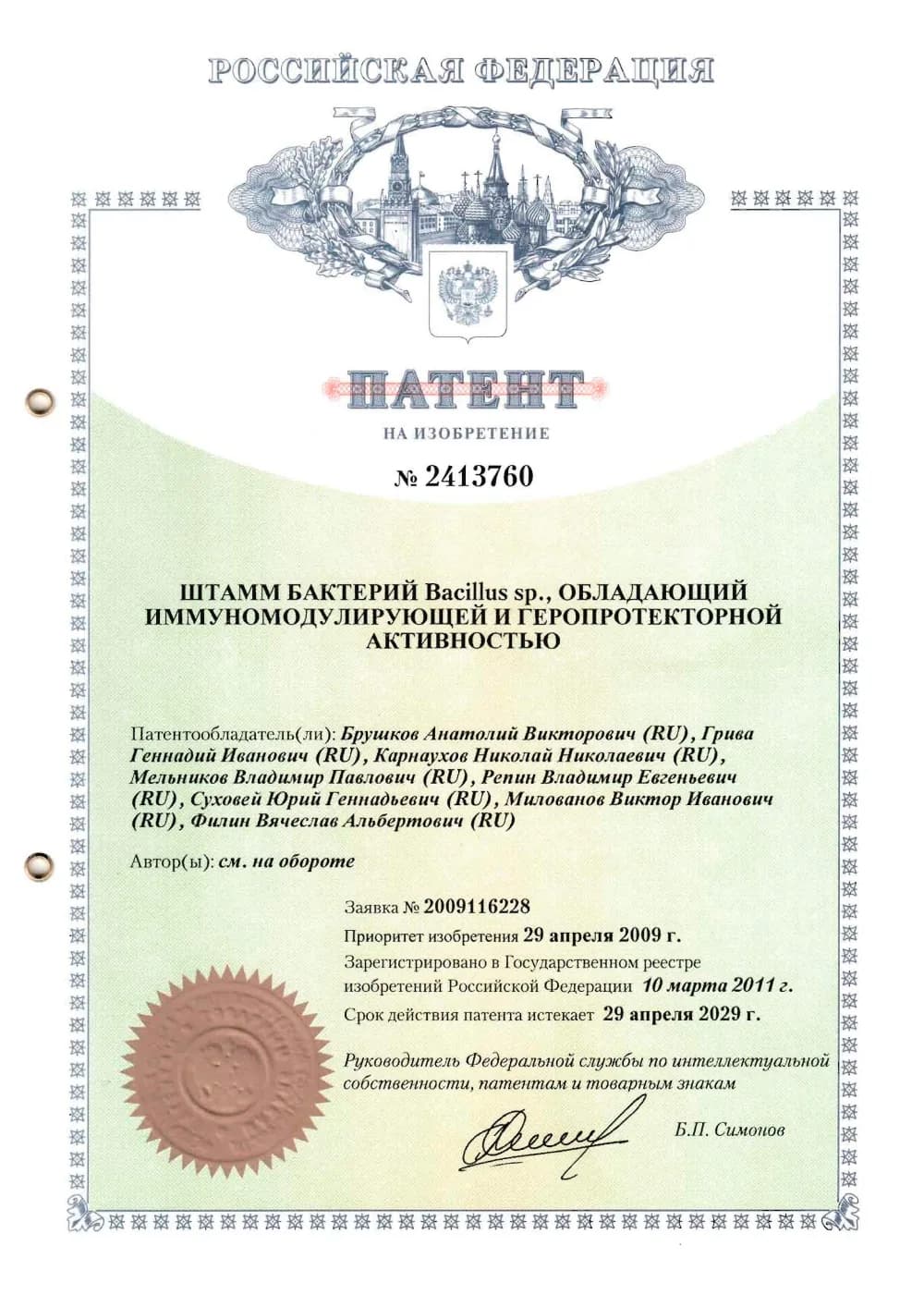
Patent WO2012060729
Patent WO2012060729
Patent family scan
Patent family scan
Cells are embedded in agarose on a slide, lysed so only their DNA remains, then placed in an electric field. Intact DNA is too large to move; fragmented DNA migrates toward the anode, forming the 'comet tail.' The tail's length and intensity quantify DNA damage per cell. In the reference experiments, cells challenged with an oxidative stressor showed dramatically shorter tails when pre-treated with the Bacillus F postbiotic — the before/after you can drag above.

Micrographs & renders

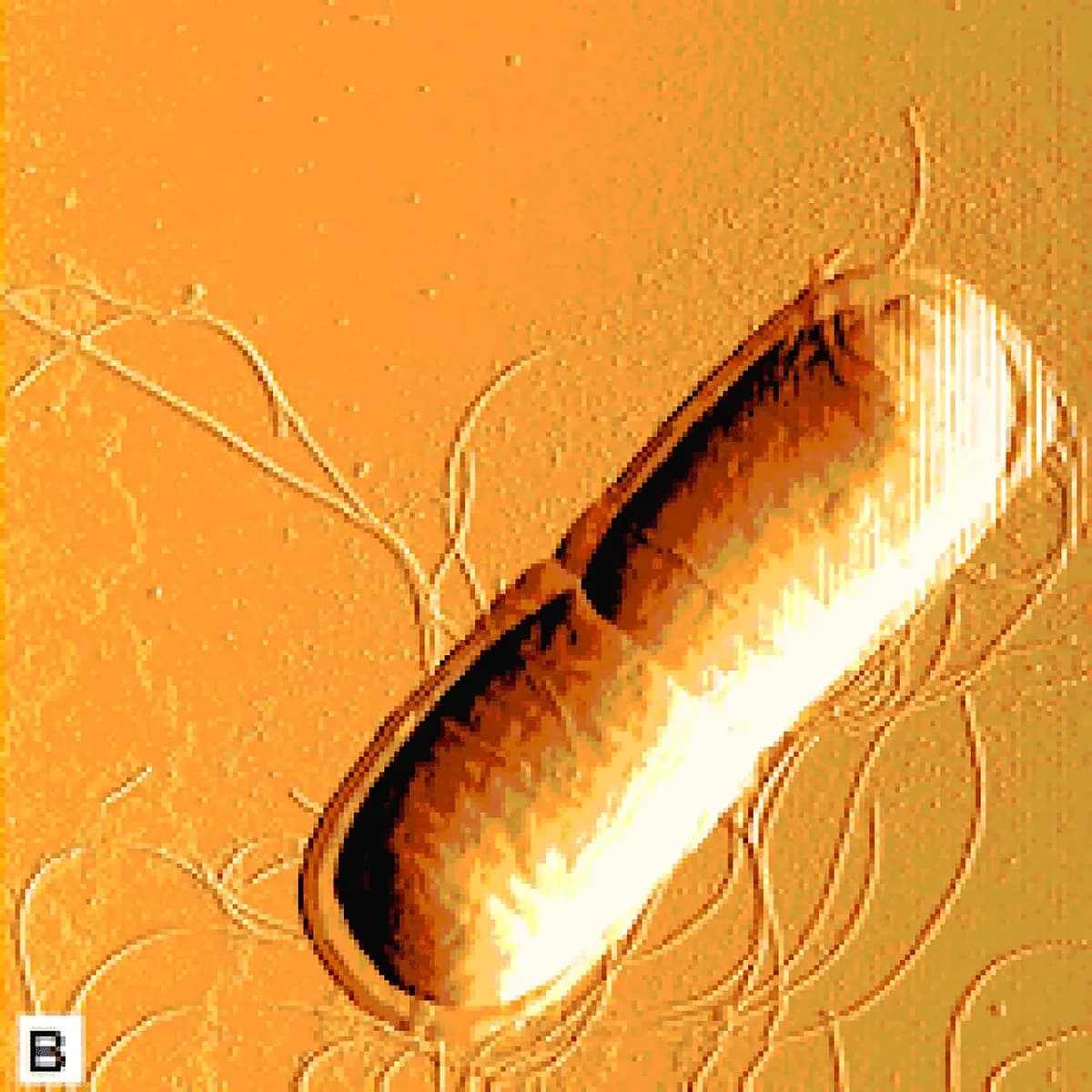
Electron micrographs of the strain and the 3D renders derived from them.
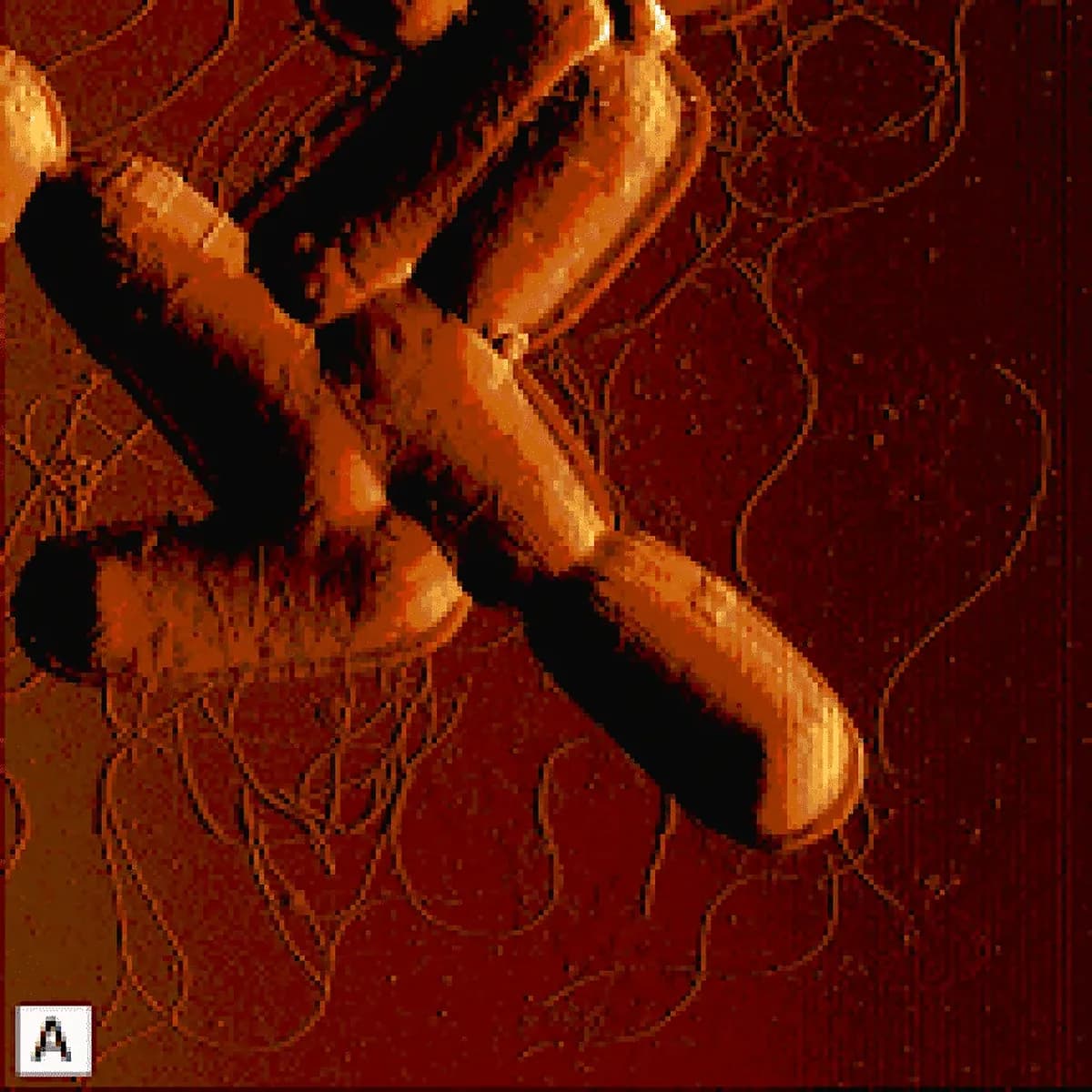
Micrograph of the Bacillus F strain
3D render of Bacillus F bacteria
Bacillus F culture imagery

Questions about the evidence

The international application is WO2012060729 ("Bacillus sp. strain and applications"), filed through WIPO, with national-phase filings in RU, EP, US, JP and CN — five national patents in total. Each entry is listed with its register reference in the Genome & patents section of this page.

The organism is not dated directly — the permafrost layer that sealed it is. The Mammoth Mountain (Yakutia) sediment layers are dated by paleomagnetic and biostratigraphic methods, and a bacterium recovered from the sterile interior of a core cannot be younger than the layer it was sealed in. The estimate that follows is roughly three million years.

Single-cell gel electrophoresis measures DNA fragmentation per cell. Cells are lysed in agarose and placed in an electric field: intact DNA is too large to migrate, fragmented DNA streams toward the anode and forms a visible "comet tail". Tail length and intensity quantify the damage.

The WO2012060729 patent scan and the national patent family scan, alongside the comet-assay imaging. Every one opens at full resolution — nothing is summarised in place of the scan.

Convinced by the evidence?

The same organism, the same evidence, in every bottle. Start with the flagship drops.

Order the DropsRead the comparisons
Bacillus F — postbiotic drops
Order now