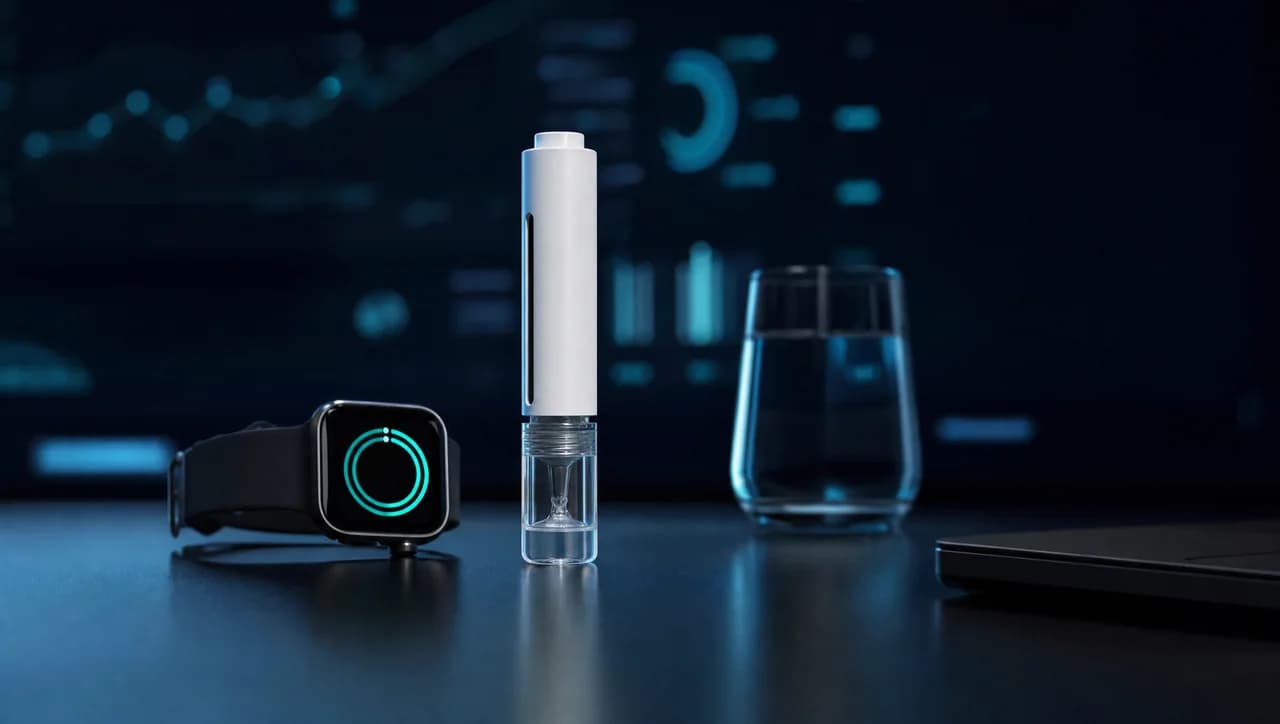
About the formulation
For the n-of-1 experimenter — someone running a protocol on themselves with actual measurement attached. This page is less about the product than about how to test it properly, because a badly designed self-experiment produces confident conclusions from noise.
Biohacking has a methodology problem. The typical protocol changes four variables at once, runs for three weeks, and concludes from how someone felt on a Tuesday. That is not evidence; it is anecdote with a spreadsheet attached.
If you are going to run this, run it in a way that could actually tell you something — including the possibility that it did nothing.
How it works
Establish a real baseline first. One measurement is not a baseline: biological-age and oxidative-stress panels carry meaningful variance, so two readings before you start tells you what your noise floor looks like.
Change one thing. If you begin this alongside a new training block and a sleep protocol, you have learned nothing about any of them.
Run 90 days. This is a cumulative preparation; a three-week window is inside the noise of most panels.
Re-test under matched conditions — same lab, same assay, same time of day, similar fasting and training state. Half of dramatic self-experiment results are protocol drift in the measurement rather than a real change.
Write the prediction down before you start. It is the only defence against reading whatever you hoped for out of an ambiguous number.
One more methodological point, because it is the one most often skipped. Decide in advance what result would cause you to stop taking it. If no possible number would change your behaviour, the experiment is decorative and you are not really testing anything — you are buying reassurance and calling it data. Writing the stopping condition down before the first bottle is what separates a genuine n-of-1 from a subscription.
Specifications
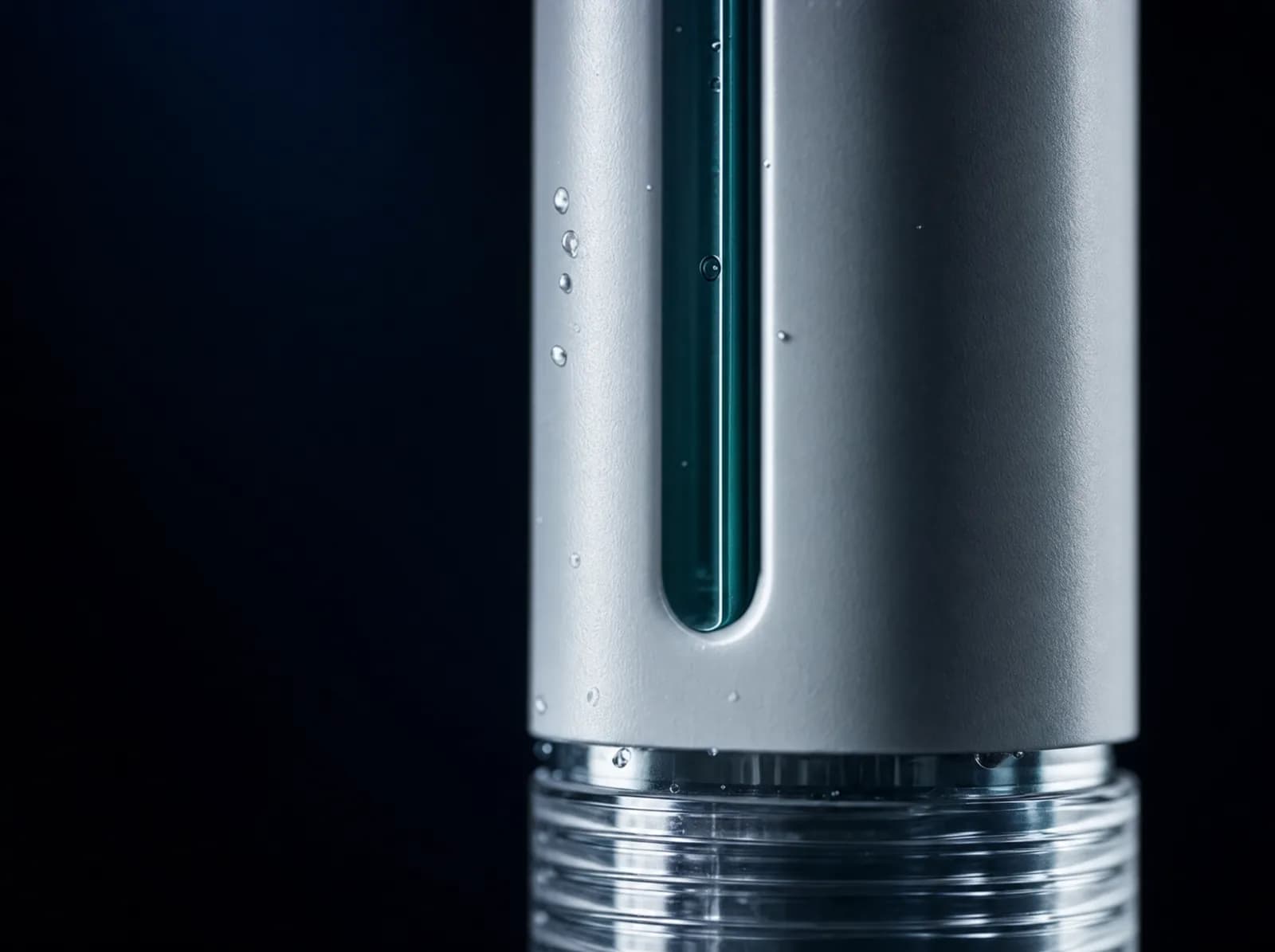
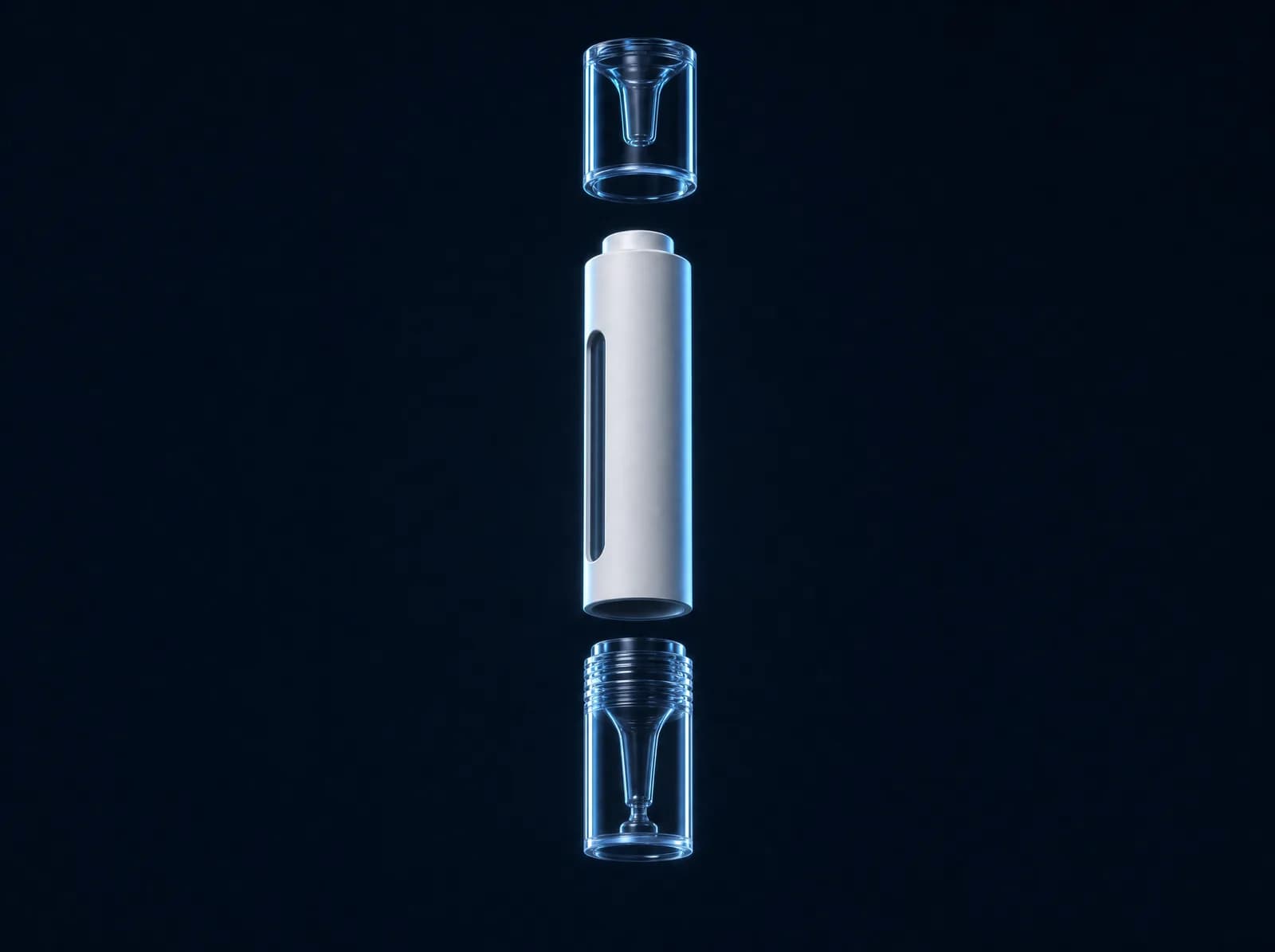
| Format | Sublingual applicator pen — clear cartridge with measured-dose tip |
| Active fraction | Cell-free Bacillus F metabolite complex (postbiotic) |
| Daily dose | 1 ml measured dose, sublingual, morning |
| Protocol length | 30 days per bottle · 90 days recommended before re-testing |
| Storage | Room temperature, away from direct light |
| Origin | Fermented & bottled in the EU · strain from Yakutia permafrost |
| Documentation | Patent WO2012060729 · deposited genome sequence |
| Suggested trial length | 90 days between matched panels, single-variable |
Compliance & standards
The strain and its applications are covered by international patent WO2012060729 plus five national patents, and the organism is sequenced and deposited — so every batch comes from the same defined organism. The patent scans and the comet-assay imaging are published openly on the Science page.
Marketed as a dietary supplement — not a medicine; statements have not been evaluated by the FDA.
What to expect
Expect the discipline to matter more than the compound. A well-run trial of a mediocre input teaches you more than a sloppy trial of an excellent one.
Expect, too, that a properly designed ninety-day single-variable test may return nothing. That is a real result and it is worth knowing. We would rather sell one bottle to someone who measured honestly than twelve to someone who never found out either way.
Use cases
- Quarterly panel runners with an existing measurement cadence to slot this into.
- Stack auditors removing compounds one at a time to find which were doing anything.
- Documentation-first experimenters who want the patents and the assay methodology before the bottle.
Not sure where it fits? Start with Bacillus F vs NMN — our most-read comparison.
Frequently asked
Related solutions
Start your 30-day protocol
Limited monthly batches. We confirm availability for your country within 48 hours.