What is Bacillus F?
Bacillus F bacteria were recovered alive from three-million-year-old Siberian permafrost — and the postbiotic is made from them. This page is the plain explanation: what the organism is, what is documented about it, and what it is not.
The organism
Bacillus F is the informal name given to a spore-forming bacterial strain isolated from permafrost sediment in the Sakha Republic (Yakutia), eastern Siberia. The sediment layer it came from has been dated to roughly three million years. What made the find notable was not the age of the sediment — permafrost preserves plenty of dead material — but that the organism revived in culture.
Permafrost is an unusual preservation medium. It holds material at a stable sub-zero temperature, with negligible liquid water, very low oxygen and near-total exclusion of light. Under those conditions metabolism does not so much stop as slow to a rate where the ordinary processes of decay lose their grip. The organism was not frozen in the sense of being killed and preserved; it was suspended.
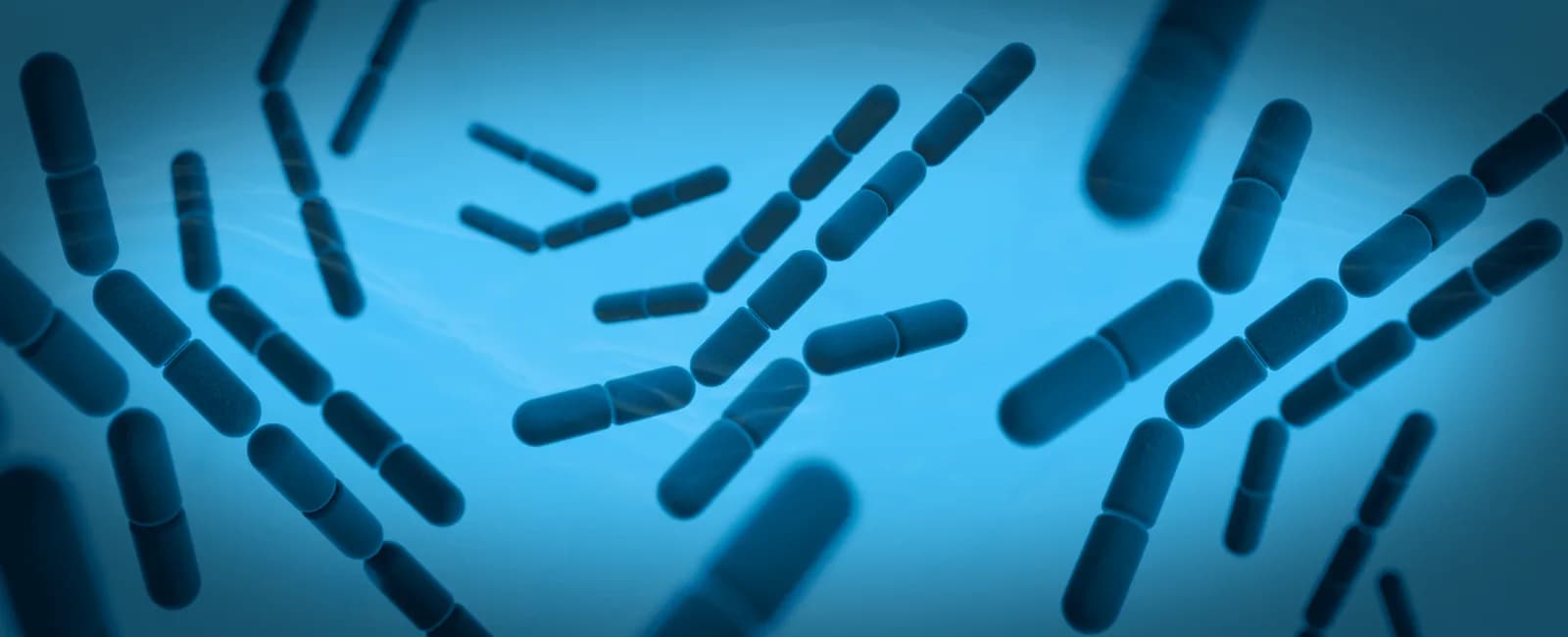
Taxonomically it sits in the Bacillus genus — a large, well-characterised group of rod-shaped, spore-forming bacteria that includes many species long used in food fermentation and industrial enzyme production. That matters for safety context: this is not an exotic organism from an unstudied branch of the tree of life. It is an unusually well-preserved member of a genus science has worked with for over a century.
How it was found
The recovery happened during permafrost core drilling at Mammoth Mountain — a research site chosen precisely because its sediment layers are old, deep and undisturbed. Cores are extracted under conditions designed to avoid contamination from surface organisms, because the entire scientific value of such a sample depends on knowing that what you culture came from the layer and not from the drill.
Prof. Anatoli Brouchkov, a geocryologist at Moscow State University, led the research program that followed. Geocryology — the study of frozen ground — is the relevant discipline here: dating the layer correctly is as much a part of the claim as isolating the organism. The Story page covers the expedition and the people involved in more detail.
Once revived, the strain went into a research program spanning microbiology, genomics and gerontology. The interesting question was never “can it survive?” — it demonstrably had. The question was what mechanisms allowed it to, and whether those mechanisms produce compounds with any effect outside the organism itself.
What is documented
This is the part of the story that can be checked rather than believed. The documentation available for the strain and the preparation made from it:
- International patent WO2012060729 — the strain and its applications, plus five national patents (RU, EP, US, JP, CN family members).
- Genome sequencing and strain deposit — the organism is characterised at sequence level, not merely described.
- Comet-assay imaging — single-cell gel electrophoresis, the reference method used for DNA-integrity work.
Scans of these documents are published in the archive on the Science page. We publish them because a supplement category this noisy has trained everyone to discount claims — and the only useful answer to that is to hand over the paperwork and let people read it.
From organism to postbiotic
The product is not the bacterium. It is a postbiotic: the stable, well-characterised metabolites the organism produces during controlled fermentation, separated from the cells and cold-processed into liquid drops.
The distinction matters more than it sounds. A probiotic delivers live organisms, which must survive stomach acid, reach the gut intact and establish themselves — a chain with several failure points, which is why probiotic products carry refrigeration requirements and viability counts that fall over shelf life. A postbiotic skips the chain entirely: the useful molecules are already made, and what is in the bottle on day ninety is what was in it on day one.
Practically, that yields a preparation that is shelf-stable at room temperature, chemically consistent batch to batch, and free of the question “is it still alive?”. It also means nothing in the bottle can colonise anything. For a comparison against the other common longevity compounds, see Bacillus F vs NMN.
What Bacillus F is not
Being precise about the boundaries is part of being credible about the rest.
- It is not a medicine. It is a wellness supplement. It is not offered to diagnose, treat, cure or prevent any disease, and nothing on this site should be read as a therapeutic claim.
- It is not a probiotic, and it is not a live-culture product.
- It is not a longevity guarantee. No supplement extends a human lifespan on present evidence, and anyone telling you otherwise is selling harder than the data allows.
- It is not a replacement for sleep, training, diet or medical care.
What it is: a documented preparation from an unusually well-preserved organism, sold to people who want to read the paperwork before they take anything. If that is you, the flagship drops are where to start.